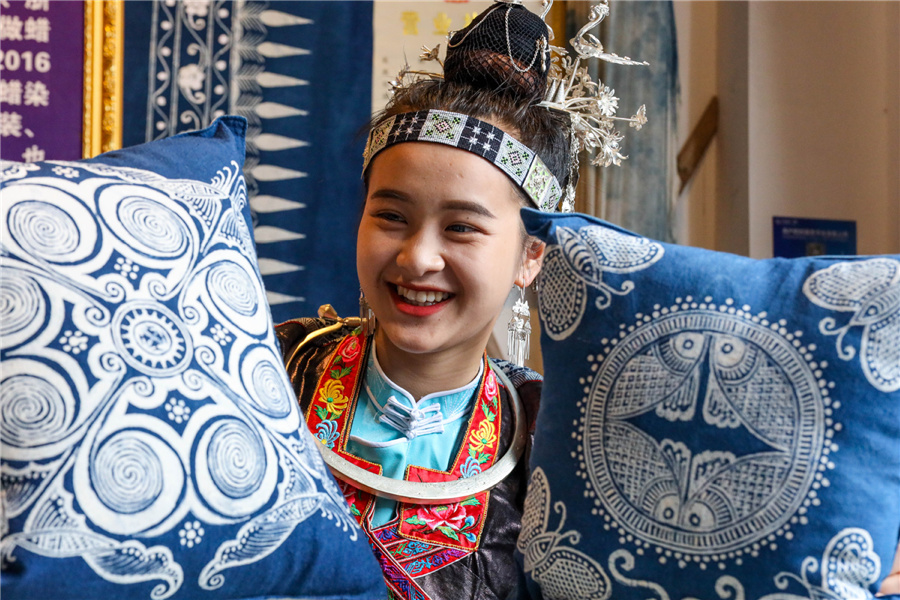
Miao Batik
Introduction
Miao Batik is a traditional resist-print dyeing technique intricately tied to the cultural heritage of the Miao ethnic group in China. This ancient art form has been practiced for over two millennia. The Miao people, residing primarily in the provinces of Guizhou, Hunan, Yunnan and Sichuan, have refined this craft into a distinctive cultural expression, characterized by its vivid patterns and the use of indigo dye.
Techniques and Methods
The creation of Miao Batik involves a meticulous process where artisans apply melted wax on fabric to outline intricate designs. Once the wax hardens, the cloth is submerged in an indigo dye bath. The wax acts as a resist, preventing the dye from coloring the areas it covers. After dyeing, the wax is removed by boiling the fabric, revealing striking white patterns against the indigo background. This process can be repeated with different colors to achieve more complex designs.
Traditional patterns in Miao Batik include geometric shapes, floral motifs, animals and elements from folk tales. These designs often hold cultural significance, reflecting the Miao people's connection with nature and their mythology. The use of beeswax and copper tools to apply the wax ensures precision and allows the craftsperson to create intricate details by hand.
Cultural Significance
Miao Batik is more than just a textile art; it is a vessel for cultural transmission and identity. The craft is traditionally passed down from mother to daughter within Miao communities, ensuring the preservation of skills and cultural stories embedded in the motifs. In 2006, Miao Batik was recognized as part of China's intangible cultural heritage, highlighting its importance in cultural preservation.
The motifs used in Miao Batik often tell stories of the Miao people's history, beliefs and environment. Common themes include the Chinese zodiac and local folklore. This symbolic language allows the Miao people to express their cultural heritage through wearable art such as garments, as well as decorative items like wall hangings.
Challenges and Future Directions
Despite its growth, the Miao Batik industry faces challenges, such as the migration of young people to urban areas for employment, which threatens the continuity of traditional skills. To address this, initiatives have been undertaken to link Miao Batik with contemporary fashion and lifestyle products, making it appealing to a broader audience. Innovators in the field are exploring new color palettes and integrating batik patterns into modern designs to attract younger consumers.
Additionally, the integration of tourism with cultural heritage provides a sustainable path for the craft's future. By offering immersive experiences where tourists can learn and participate in batik-making, communities can generate income and promote cultural exchange. The role of cultural festivals and exhibitions further enhances the visibility of Miao Batik and fosters appreciation for this unique craft.








